Built for the Real World: Two Days of Technical Depth and Collaboration
:format(webp):no_upscale())
DeltaQuad joined the PX4 community in Leuven and FOSDEM in Brussels for two days of in-depth discussions on VTOL autonomy, system limits, and real-world flight performance.
13 February 2026
Two days with the PX4 community and at FOSDEM, where across two very different settings, the same conversations kept coming up about real-world VTOL autonomy, system limits, and field performance.
On Friday, January 30, our DeltaQuad team met with the PX4 community in Leuven. There, robotics engineers and developers quickly moved from introductions to in-depth technical discussions, a common pattern when everyone faces similar challenges.
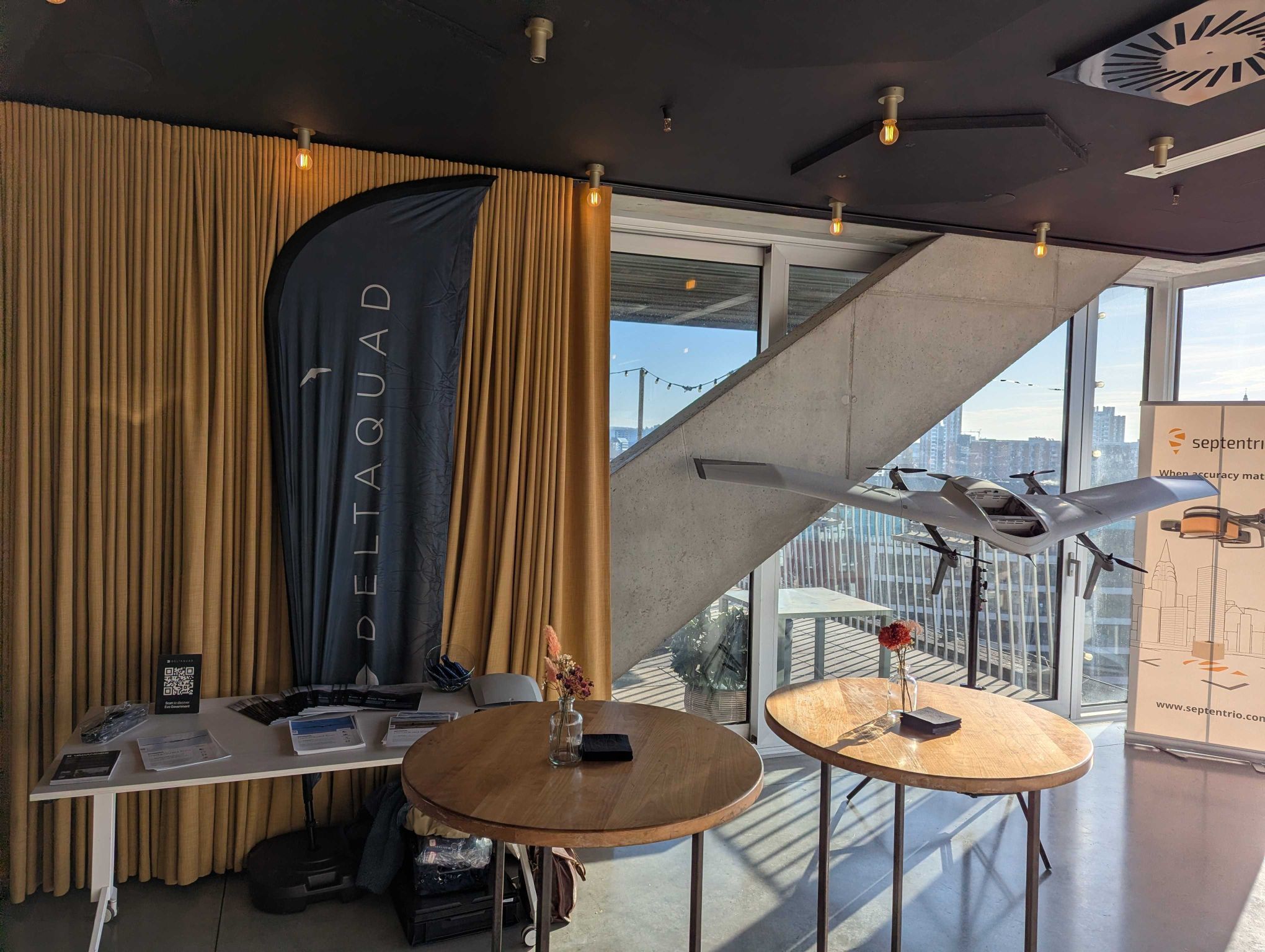
We started by discussing GPS spoofing, then moved on to flight control behaviour and how systems respond in real-world situations. We also discussed signal consistency, controller responses, system limits, and ways to integrate everything. People wanted to know why certain decisions were made and how the system handles unexpected problems. The detailed discussion felt natural and kept the conversation moving.
When designing Vertical Take-off and Landing (VTOL) systems for real-world use, you have to think carefully about these situations. Autonomy must work well even when conditions are not perfect, and both hardware and software should be built to work together from the start. Being part of the PX4 community helps us stay sharp by letting us share knowledge, challenge ideas, and improve our technical methods together.
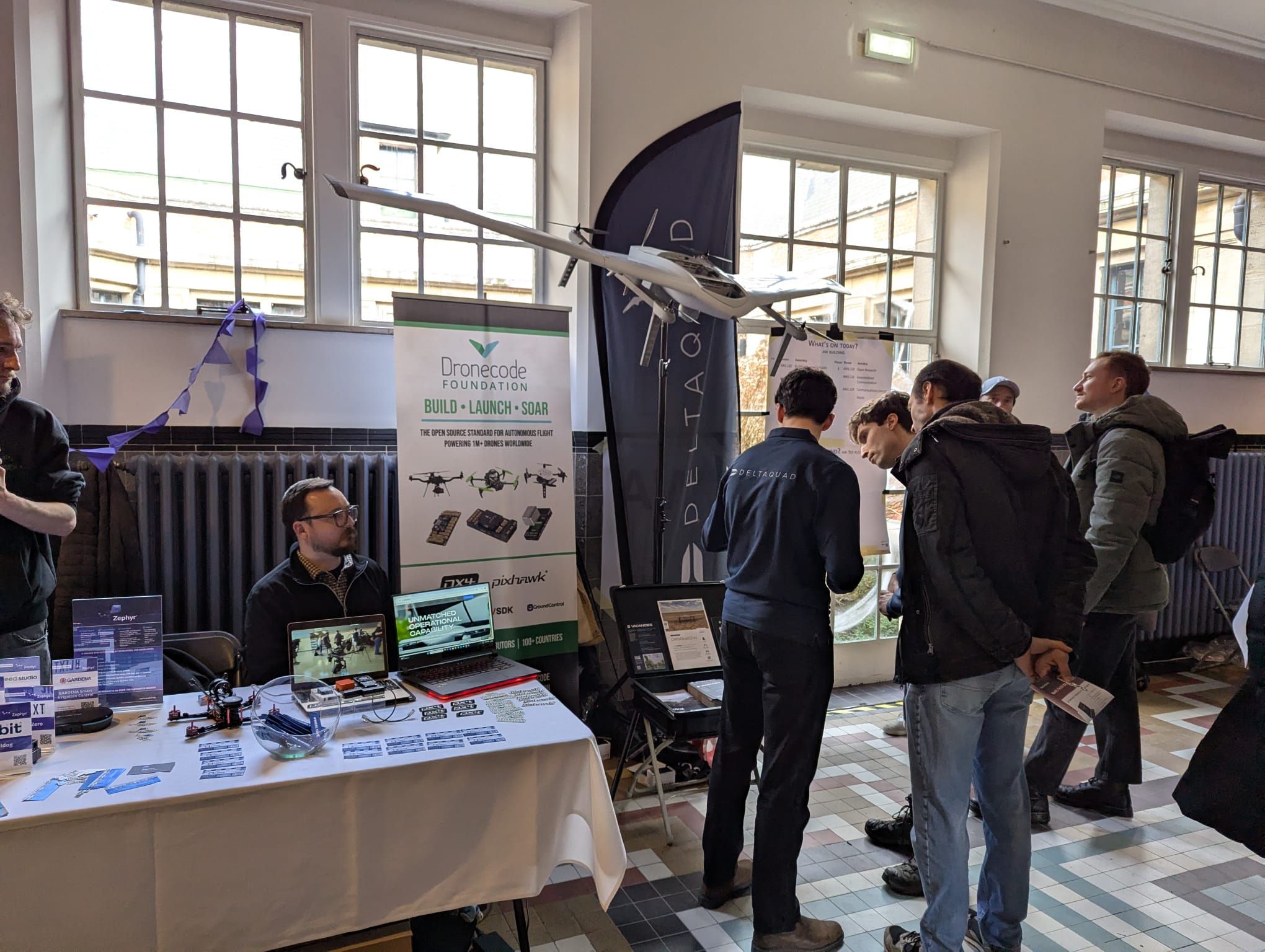
The next day in Brussels brought a different atmosphere.
At FOSDEM, we displayed the DeltaQuad EVO at the entrance, which attracted a steady stream of visitors all day. Some people recognised the platform right away, while others stopped out of curiosity to learn more about it.
Most questions focused on how things work in practice. Developers wanted to know about the drone’s software stack, how its parts fit together, what changes from development to deployment, and how it handles wind, interference, or rough terrain. Even though the setting was different from Leuven, people were just as curious. They wanted to see how design and theory translate into real-world performance.
Conversations like these are important because they show who is truly interested in building systems that work reliably outside controlled environments.
We combine open-source flight control and autonomy with production-ready VTOL platforms. That means every improvement has to hold up in real missions, not just in testing. As systems get better and missions become more complex, people expect more from both performance and reliability. To meet these new challenges, our team continues to build technical skills and work together, helping us grow professionally as we adapt to changes in the field.
If you enjoy solving tough problems, improving how systems behave in the real world, and seeing your work used on real missions, you’ll probably recognise yourself in these conversations. If that sounds like you, take a look at our open positions.
Want to meet us in person? You can find us in the upcoming events, where we would love to continue the conversation.
1. Aerospace Career Day 2026 - 04 March 2026
2. De Techniek Carrièrebeurs - 24 & 25 April 2026
If you’re attending, feel free to stop by and talk to us about flight control, autonomy, and any challenges that we are working on.